
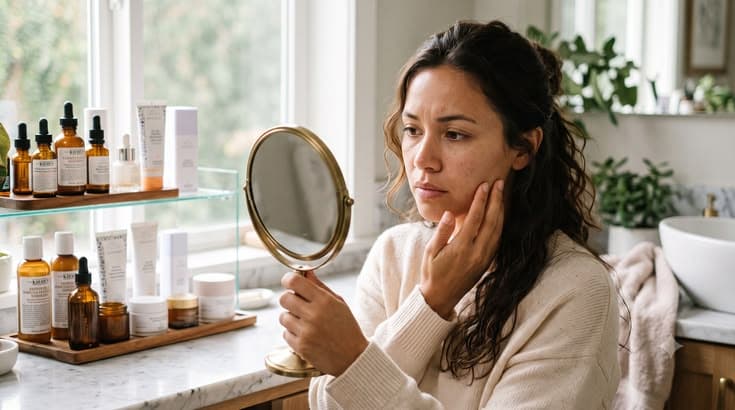
You may have a regular skincare routine, use good-quality products, and still feel that your skin looks tired, uneven, or less radiant than you'd like.So, what could be causing it?Healthy-looking skin depends on more than the products applied to the surface. Hydration, dead skin-cell buildup, sun exposure, lifestyle, skin type, and individual skin concerns can all influence how your complexion looks.
Your Skincare Routine May Not Address Your Actual Skin Concern
One common mistake is choosing products based only on trends or recommendations from others.A routine that works well for one person may not be suitable for another. Dryness, excess oil, uneven pigmentation, sensitivity, acne-related marks, and dehydration can all make skin appear less radiant.Understanding your specific skin type and concern is an important first step before changing your routine.
Dehydrated Skin Can Look Tired
Even oily skin can become dehydrated.When the skin lacks sufficient water, it may appear dull, tight, rough, or less plump. Environmental conditions, insufficient hydration, excessive cleansing, and unsuitable skincare products can contribute to dehydration.A consistent, gentle routine that supports the skin barrier can help maintain a healthier appearance.
Dead Skin Cells May Affect Your Glow
Your skin naturally sheds dead cells. When they accumulate on the surface, the complexion can look rough or dull.However, exfoliation needs to be approached carefully. Over-exfoliating or combining too many active ingredients can irritate the skin and potentially make existing concerns worse.The right approach depends on your skin type and sensitivity.
Sun Exposure Matters
Daily sun exposure can contribute to uneven skin tone, pigmentation, and premature signs of skin ageing.That's why sunscreen should be an important part of a daytime skincare routine not something reserved only for holidays or outdoor trips.Using a broad-spectrum sunscreen consistently and reapplying when appropriate can help protect the skin from ongoing UV exposure.
Your Lifestyle Can Show on Your Skin
Skincare products are only one part of the picture.Poor sleep, stress, smoking, an unbalanced diet, dehydration, and environmental exposure may also affect how your skin looks and feels.A healthy routine therefore includes both skin care and overall lifestyle habits.
More Products Don't Always Mean Better Skin
Adding multiple serums, acids, scrubs, masks, and treatments may seem like a faster way to improve your skin.In reality, too many products can overwhelm the skin.A simple routine built around appropriate cleansing, moisturising, sun protection, and targeted products can often be more sensible than constantly changing products.
When Professional Skin Care Can Help
If dullness continues despite a consistent routine, it may be worth discussing your concerns with a qualified skin-care professional.A professional assessment can help identify whether the appearance is related to dehydration, pigmentation, acne-related concerns, sensitivity, or another skin issue and whether professional treatment is appropriate.At Sky Skin Clinic, personalised skin-care guidance can help people understand their concerns and choose an approach suited to their individual skin needs.
Conclusion
Dull-looking skin doesn't necessarily mean your skincare routine is bad.Sometimes, the issue is using the wrong products, overdoing your routine, inadequate sun protection, dehydration, lifestyle factors, or an underlying skin concern that needs professional assessment.Instead of continuously adding new products, understand what your skin actually needs and build your routine around that.Healthy skin isn't about having the most products it's about having the right approach for your skin.