
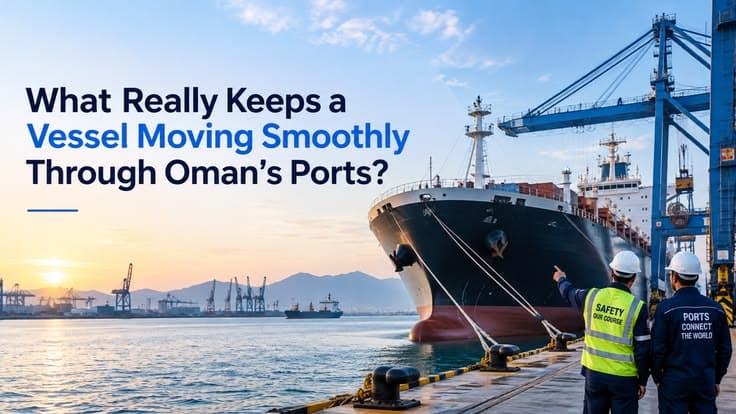
The vessel arrives. But the real work started much earlier.
From the outside, a port call can look simple: a vessel arrives, docks, handles its cargo, and leaves. In reality, every minute of that process involves coordination. Berth arrangements, port documentation, cargo operations, crew requirements, marine supplies, customs procedures and communication with different authorities all have to come together at the right time.
One missing piece can affect the entire schedule.
That is why smooth vessel movement is less about one service and more about how well every moving part is connected.
Before the Vessel Reaches Port
The port call doesn't begin when the vessel enters the harbour. Preparations begin earlier.Information needs to move between the vessel, shipowner, charterer, terminal and relevant authorities. Arrival and departure arrangements, documentation and operational requirements need to be coordinated before the vessel is alongside. This preparation creates the foundation for everything that follows.
Then Comes the Port Call
Once the vessel reaches port, the pace changes.
There may be several activities happening simultaneously:
Arrival → Clearance → Berthing → Cargo Operations → Crew Support → Supplies → Departure
None of these activities operates completely on its own.
Cargo operations may depend on terminal coordination. Crew requirements may need local arrangements. Marine supplies may need to be delivered within a specific window.
The better these activities are coordinated, the smoother the vessel's turnaround can be.
What Happens When Something Goes Wrong?
Imagine a vessel is ready for its next operation, but one required document has not been processed. Or cargo handling is delayed.Or a crew change requires urgent coordination.A small issue can quickly become a scheduling problem.This is where a local ship agency becomes more than an administrative contact. The agent acts as a connection between the vessel and the different parties involved in the port operation.
The objective isn't simply to complete paperwork. It's to keep the operation moving.
The People Behind the Vessel
Ships don't move through ports by themselves.
Behind every successful port call are people coordinating with:
Vessel operators
Port authorities
Terminal operators
Customs
Crew
Cargo teams
Marine service providers
Logistics partners
Good communication between these groups can make a complicated operation considerably easier to manage.
Oman Adds Another Strategic Advantage
Oman's location makes its ports important for international maritime and logistics activity.Sohar, Duqm, Salalah and Muscat support different types of marine and logistics operations, creating opportunities for businesses moving cargo through the region.But having strategic ports is only part of the equation.
Efficient coordination is what turns port infrastructure into an efficient operation.
It's Not About Speed Alone
A fast port operation isn't necessarily a successful one.
A vessel needs:
Safety + Compliance + Communication + Coordination + Reliability
Moving quickly without proper documentation or safe procedures can create bigger problems later. The real goal is a well-planned and controlled port call that allows the vessel, cargo and crew requirements to be managed efficiently. Integrity Marine supports vessel agency and marine logistics operations across Oman's major ports, including Sohar, Duqm, Salalah and Muscat. Its services include vessel coordination, port clearance, cargo handling coordination, crew support, bunkering and marine supply coordination.
The Invisible Work Behind Every Smooth Departure
When a vessel leaves port on schedule, most people only see the final result.
They don't see the calls, documents, coordination, arrangements and problem-solving that happened beforehand.
That's the real engine behind a smooth port call.
Not just the vessel.
Not just the port.
But the coordination connecting everything together.
Final Thought
In maritime operations, small delays can have large consequences.
The right local marine partner helps keep communication clear, requirements organised and port activities coordinated so vessel operators can focus on the voyage rather than chasing every operational detail.
Because when everything works smoothly, the best work is often the work nobody notices.