
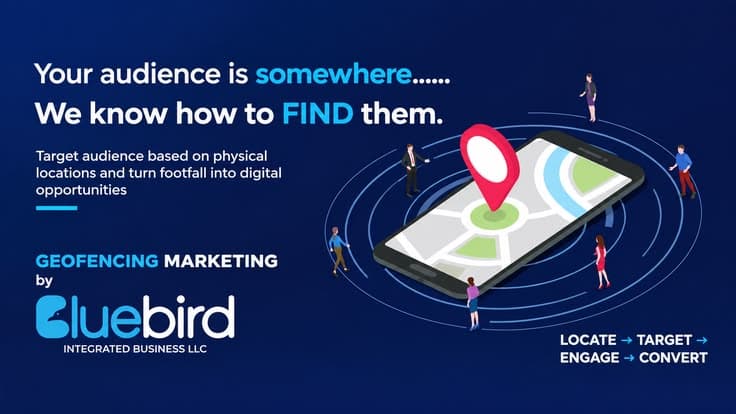
For a local business, reaching the right people in the right location can be more valuable than simply reaching a large audience. A customer may be just a few kilometres away, searching for a service or visiting a competitor but if your business is not visible to them at the right moment, that opportunity can easily be missed.
This is where geo-fencing marketing comes in.
What Is Geo-Fencing Marketing?
Geo-fencing is a location-based advertising technique that creates a virtual boundary around a specific geographic area. When users enter or interact within that targeted area, businesses can use location-based advertising strategies to reach relevant audiences.Instead of showing the same advertisement to everyone, businesses can focus their marketing on people within specific locations.For local businesses, this can make advertising more targeted and relevant.
Why Location Matters in Local Marketing
Imagine a customer is visiting a shopping area, business district, residential neighbourhood, or competitor's location and is looking for a service your business provides.A traditional campaign may reach thousands of people who are nowhere near your business.A location-focused strategy allows businesses to concentrate their marketing efforts around areas that matter to them.
Right audience + Right location + Right message = Better opportunity for local engagement.
How Geo-Fencing Can Support Customer Acquisition
Geo-fencing can be used as part of a broader digital marketing strategy to support:
Local brand awareness
Nearby customer targeting
Store or business visits
Promotional campaigns
Event marketing
Competitor-area targeting
Local service promotion
Customer engagement
But geo-fencing should not work alone. It becomes more powerful when combined with SEO, Google Business optimisation, targeted advertising, landing pages, analytics, and lead-generation systems. BluebirdMedia's services specifically include local visibility, Google Business optimisation, GEO targeting, targeted advertising, landing-page optimisation, CRM integration, and analytics.
From Location to Lead
Getting a customer to see an advertisement is only the first step.
The next question is:
What happens after they see it?
A strong campaign should guide the customer toward a useful action visiting a website, making an enquiry, calling the business, requesting a quote, booking a service, or visiting a physical location.This is why geo-fencing works best as part of a complete customer journey rather than as an isolated advertising tactic.
Local Businesses Can Think Smaller to Grow Bigger
Businesses often try to reach everyone.But for many local businesses, the better question is:
“Who are the customers most likely to need us and where are they?”
A focused geographic strategy can help businesses spend their marketing attention more intelligently and build stronger local visibility.
The Future of Local Marketing Is More Targeted
Digital marketing is moving beyond simply asking “Who is my audience?”
Businesses can increasingly think about:
Who are they?
Where are they?
What are they looking for?
When are they most likely to act?
Combining location intelligence with search visibility, customer data, advertising, automation, and analytics can create a more connected growth strategy. BluebirdMedia describes its approach as integrating visibility, customer engagement, automation, and measurable performance rather than treating marketing activities separately.
Conclusion
Geo-fencing marketing gives local businesses another way to think about digital advertising: not just reaching more people, but reaching more relevant people in relevant locations.
When combined with strong local SEO, Google Business optimisation, compelling advertising, and an effective conversion strategy, location-based marketing can become a valuable part of a modern local growth system.
For businesses looking to turn local visibility into real customer opportunities, the location of your audience can matter just as much as the message you show them.